Stop 3 · The end of the investigation
Completion requirements
Stop 3 of 6
The end of the investigation
What the archives say
- Born in Lille in 1900, the son of a furniture craftsman. First offences from 1918.
- Sentenced to relegation, he arrived in French Guiana in March 1931.
- In 1932 the Cayenne criminal court sentenced him to ten years' hard labour for counterfeiting: he was sent to the Salvation Islands.
- In 1936 he became a painter-decorator. From 1938 he painted the decoration of this chapel.
- Released in 1942, he died in Fort-de-France in 1964.
The lesson of the investigation. In his book, Flag reshaped his life a great deal. His paintings are a precious testimony, but they too are representations to be interpreted: a painter chooses what he shows.
Find out more
📄 Four more statements about Flag
- From penal colony to space. Flag also painted scenes of life in the penal colony. One series belonged to the Guiana Space Centre, which gave it to the Department of French Guiana in the 1970s.
- A chapel saved. Damaged after the penal colony closed, the chapel was restored with its paintings and reopened in 2007.
Sources
- David Carita, « Francis Lagrange : impostures sous la plume, témoignages sous le pinceau », BnF, France-Amériques, 2023.
- Émile Blanc, David Carita, Denis Lamaison, « Une vie en trompe-l'œil : l'artiste bagnard Francis Lagrange », Criminocorpus, 2016.
- Base Mérimée PA00105899 (chapelle de l'île Royale).
🛠 Points to validate for this mock-up
- Who commissioned the chapel paintings: the island's chaplain according to the BnF, the bishop of Cayenne according to other sources. To be specified with the site managers.
⏭ What next?
Next stop: 4 · An ordinary convict. Landmark: the lighthouse of Île Royale.
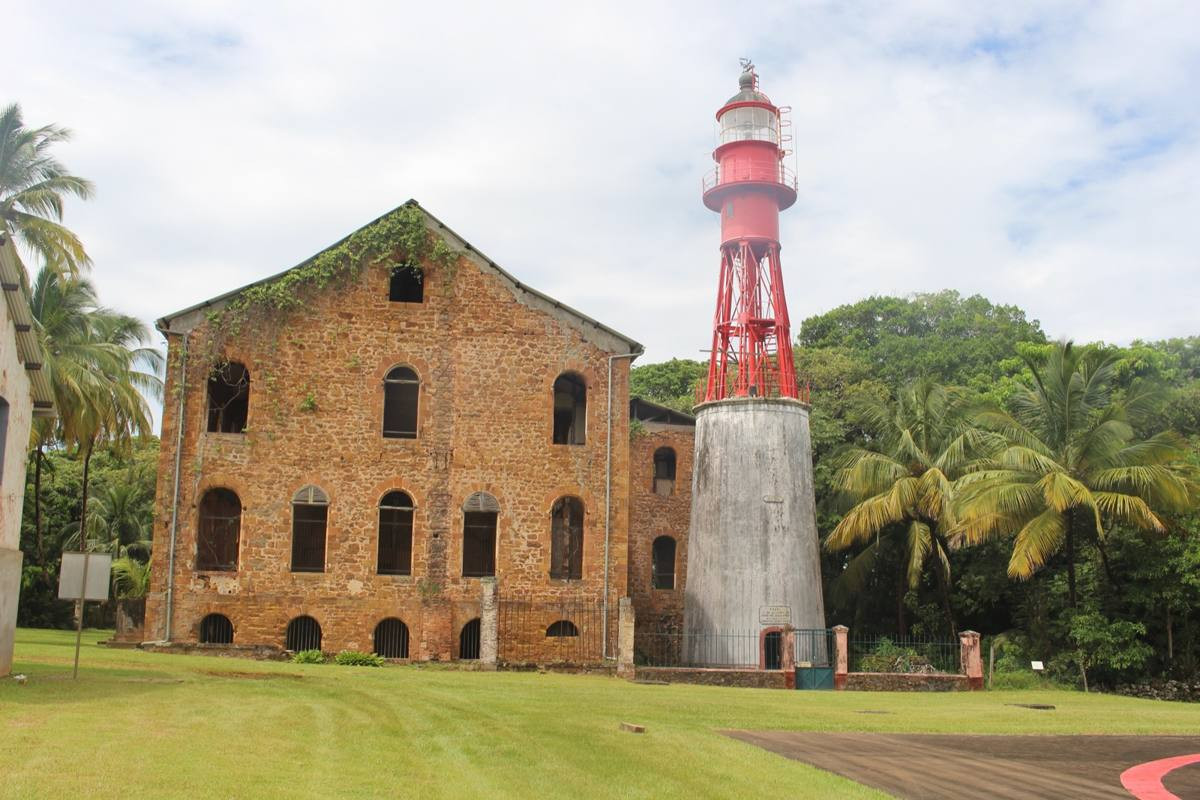
🧭 Route to stop 4 and walking time : to be checked on site
In this mock-up, stop 4 is presented as a synopsis.
Next stop